Your business requires routine sanitation based upon potential hazards, food processing capacity, food allergen presence, and regulatory checks, combined with documented records demonstrating food safety protocols, inspection results, and government health requirements. The following sections describe essential sanitation program components.
Main Points
- Food safety cleaning specialists from Brampton support restaurants, grocery departments, commissaries, warehouses, bakeries, schools, mobile vendors, and allergen-sensitive operations.
- High-touch surfaces, food-contact equipment, kitchens, floors, drains, restrooms, and storage areas are disinfected using sectional methods to avoid cross-contamination.
- Recording of conclusion through tests, audits, and action records confirms trained specialists have confirmed proper chemical concentration, alignment, and exposure duration.
- Routine, regular, and periodic duties allocated by area make up sanitation timelines built on threat, output capacity, switches, spills, and regulations.
- Insurance, color-coded instruments, hazard analysis knowledge, sanitation understanding, safety training education, credentials, and audit-ready sanitation documentation are critical supplier qualifications.
Which Brampton Venues Need Food Safety Cleaning?
Any Brampton facility that handles, stores, prepares, packages, or serves food needs hygiene cleaning. You must implement it if your business falls under public health inspection, food premises regulations, or internal HACCP-based controls. That requirement covers restaurants, cafeterias, commissaries, grocery food departments, butcher shops, seafood counters, convenience stores, and institutional kitchens.
Adherent sanitation standards is essential in distribution centers, manufacturing facilities, cold storage areas, bakery retailers, educational meal programs, banquet venues, and meal delivery services. Temporary mobile establishments apply similarly, examples being catering trucks, festival vendors, and pop-up food booths. Your establishment needs written cleaning standards if your workers handle raw materials, divide prepared dishes, warm meals, or keep allergens stored. In Brampton, cleanliness remains not discretionary; it forms part of legal, operational, and consumer protection compliance.
What Services Do Brampton Cleaning Experts Provide?
Your operation needs cleaning professionals who sanitize all high-touch areas, kitchens, floors, and restrooms to maintain food safety compliance and public health standards. These zones receive attention due to their elevated cross-contamination potential, trip and slip dangers, and breaches of sanitation codes.
By knowing exactly what gets cleaned, you are able to confirm your operation's sanitation protocols satisfy all operational and regulatory requirements.
Emphasizing High-Touch Surface Cleaning
assign how frequently each area is sterilized
confirm adequate disinfection
Food Prep Areas, Flooring, and Sanitary Facilities
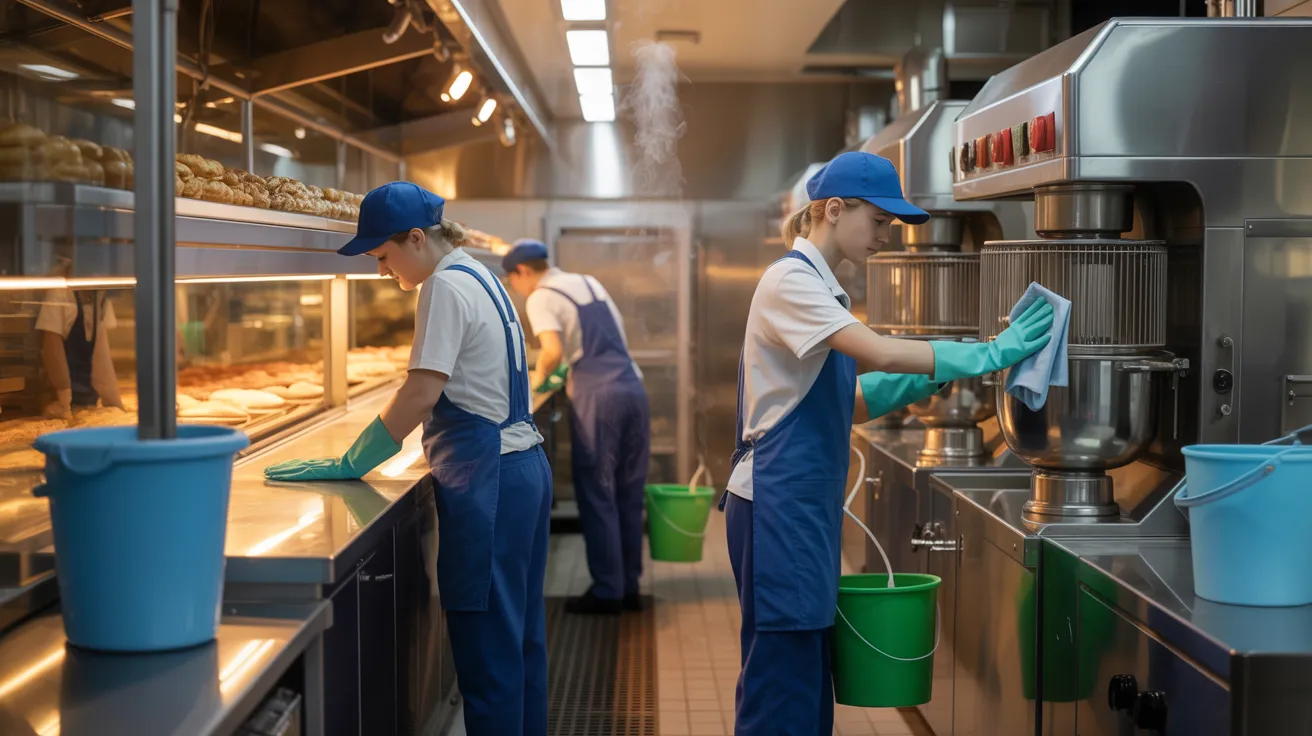
Expect Brampton cleaning experts to focus on kitchens, floors, Brampton Commercial Cleaning Services and restrooms because each area carries distinct food safety, accident prevention, and sanitation risks. In industrial kitchens, you need grease removal from cooking stations, appliance surfaces, drain systems, preparation areas, and backsplashes to reduce contamination and pest pressure.
Floor care that is recorded should equally be anticipated. Technicians clean and remove buildup from tile grout, ceramic surfaces, and vinyl floors, then apply suitable dehydration methods so you can reduce slip incidents and meet regulatory standards. They also handle entryways where moisture and debris migrate indoors.
For restroom sanitation, cleaners disinfect touchpoints, fixtures, partitions, dispensers, and waste containers, then replace products and reduce odor. They also maintain restaurant cleaning supply rooms where product storage, sink cleanliness, and drain systems impact daily sanitation standards and worker protection.
Why Food Safety Cleaning Matters in Brampton
Brampton facilities demand proper hygiene standards to meet health code requirements and pass audits. You also minimize cross-contamination by cleaning and sanitizing food-contact surfaces, equipment, and high-touch areas correctly. Most importantly, you safeguard community wellness by reducing the chance of food poisoning in your establishment.
Health Code Compliance
Since Brampton food establishments must follow rigorous sanitary regulations, your food safety cleaning directly determines your ability to meet health codes, safeguard diners, and eliminate regulatory penalties. You must maintain sanitary food-contact surfaces, documented cleaning schedules, correct sanitizer application, and documented employee protocols that meet municipal and provincial inspection expectations.
Should your cleaning standards deteriorate, you risk infractions, compliance orders, loss of reputation, and possible interruption to service during subsequent audits or enforcement actions.
Cross-Contamination Prevention
Maintaining regulatory compliance copyrights on your capacity to prevent cross-contamination during everyday food preparation and sanitation. You need to partition uncooked items from finished dishes, sterilize work zones between assignments, and position cleaning agents away from food surfaces. Clear procedures reduce transfer risks and support consistent compliance during inspections.
Implementing allergen segregation helps keep priority allergens from contacting shared surfaces, containers, or equipment. Utilize separate boards, color-labeled items, and strict utensil labeling so staff don't mix items during preparation or service. Require handwashing after handling raw meat, seafood, eggs, or allergen-containing products. Refresh cleaning cloths often, and verify sanitizer strength with test strips. When you train staff to follow these controls every shift, you create a cleaner, safer operation that meets Brampton's food safety expectations regularly.
Public Wellness Defense
When food safety cleaning deteriorate, you don't only face inspection setbacks—you expand the chance of foodborne illness affecting customers, staff, and the larger Brampton community. You also undermine your responsibility in safeguarding community wellness, especially in high-traffic food premises where pathogens travel quickly through surfaces, equipment, and touchpoints.
You need cleaning protocols that eliminate soils, disinfect appropriately, and confirm results. This involves maintaining contact periods, using authorized sanitizers, logging schedules, and educating staff to satisfy health-unit expectations. These measures prevent illness spread by minimizing pathogens before reaching surfaces or food. Throughout Brampton, effective sanitation safeguards susceptible populations, reduces outbreak risk, and proves your diligence. When you follow proper protocols, you exceed regulations—you lower hazards and facilitate secure food handling throughout the area.
In What Ways Does Cleaning Help Achieve Food Safety Compliance?
Strict sanitation practices ensure food safety compliance by minimizing contamination hazards, preventing pathogen multiplication, and ensuring your facility complies with sanitation requirements under HACCP-based programs and public health regulations. You confirm that food-contact surfaces stay visibly clean and microbiologically controlled, facilitating documented preventive controls and inspection readiness.
Well-executed cleaning efforts also strengthen allergen prevention by clearing residues that can lead to undeclared allergen exposure.
When Do You Arrange Commercial Cleaning?
You'll find the best results from cleaning plans that reflect risk levels, output volume, and legal mandates rather than a unchanging calendar system alone.
facility closures, seasonal soil buildup, or pest management periods
What Should You Look For in Brampton Cleaning Experts?
Start by screening providers against food-safe sanitation requirements, not cost only. You should verify that each company understands CFIA, public health, and HACCP-aligned expectations relevant to your facility. Ask for proof of insurance, WHMIS compliance, documented staff training, and supervision practices. Review whether technicians understand contamination prevention, chemical handling, and traceable sanitation records.
Additionally, you need to evaluate service dependability and accountability. Obtain references from Brampton food operations, then review service speed, corrective-action procedures, and communication standards. Verify the company conducts supplier reviews and can deliver compliance-ready records when inspectors or external parties need proof. Verify equipment upkeep, colour-coded tools are applied correctly, and site-specific hazards are identified. A qualified provider protects compliance, product integrity, and your reputation.
Which components are part of a hygiene cleaning program?
Develop a written plan that clarifies every sanitation task, standard, and responsibility prior to production start. You should detail cleaning frequencies, approved chemicals, dilution rates, contact times, tools, and verification methods for each location, surface, and apparatus. Incorporate pre-operational inspections, corrective actions, and employee training requirements.
Your strategy should also tackle cross-contamination controls, waste handling, pest-prevention measures, and documented schedules for facilities, drains, flooring, and food-preparation surfaces. Specify how you'll distinguish between uncooked and prepared items, facilitate ingredient tracking, and keep accurate allergen labeling through validated cleaning between product changes. You should assign accountability, document signed records, and evaluate results against regulatory standards, HACCP controls, and customer requirements. When gaps appear, update procedures immediately and instruct staff.
Commonly Requested Inquiries
Are sanitation providers offered for nighttime operations in Brampton properties?
Yes, you can arrange cleaning services to support overnight shifts in Brampton facilities. You'll coordinate nighttime cleaning around production schedules, access requirements, and personnel needs. Services typically establish nighttime procedures to reduce interruption, maintain standards, and track completed work. You should verify response times, supervision, access procedures, and disposal procedures before starting service.
Can Brampton cleaning experts handle emergency spill response?
Yes, you can find Brampton sanitation professionals to provide hazard containment solutions. They handle hazard containment, evaluate dangers, contain contamination, and begin swift cleanup to minimize risk and business interruption. You should verify arrival timeframes, professional credentials, safety procedures, and disposal procedures. If your facility must meet health or food safety regulations, select a service that records events, follows compliant sanitation standards, and enables compliance verification.
Can environmentally safe disinfectants be deployed safely on food-contact surfaces?
Absolutely, plant-based sanitizers are appropriate for food-handling equipment when you opt for disinfectants approved for food contact and meeting regulatory standards. You must validate contact duration, concentration levels, and rinsing needs prior to application. Plant based formulas lower chemical burden, though you should gather demonstration of efficacy against specific pathogens. For maintaining residue free surfaces, stick to manufacturer instructions exactly and verify the disinfecting agent meets applicable food industry sanitation standards.
Will sanitation programs accommodate seasonal production changes?
Absolutely, cleaning schedules allow customization for production fluctuations. Adapt intervals, staffing, chemicals, and verification steps to correspond to seasonal patterns while upholding regulatory compliance. Lower production downtime through planning cleaning amid changeovers, peak seasons, and usage cycles. Additionally update procedural documents, training, and environmental monitoring to reflect temporary risks, new allergens, or increased soil loads. Continuous reviews preserve your program effective.
Will commercial cleaners teach your staff on sanitation best practices?
Indeed, commercial cleaning providers typically provide staff training on proper hygiene. Your team obtains training on safe chemical application, contact times, cross-contamination prevention, equipment breakdown, and record-keeping. They generally adhere to instruction with HACCP, GMP, and CFIA or regional health standards criteria. Many also execute compliance inspections to confirm standards, identify gaps, and reinforce corrective actions. This assists you to maintain consistent procedures, achieve compliance, and reduce food safety risks on a daily basis.
Summary
Partnering with Brampton food safety and commercial cleaning professionals goes beyond tidying—it guarantees your operation meets inspection standards and your standards remain compliant. From processing facilities to kitchens, each cleaned area and organized section lessens contamination risk and prevents major expenses. By scheduling maintenance at suitable frequencies and executing a comprehensive cleaning strategy, you shield staff, clients, and your image. In a heavily regulated sector, clean environments can't be overlooked—they're critical to business success.